5 Landscaping Upgrades That Cut Florida Yard
Florida yard upkeep gets expensive when plant choices, irrigation habits, and bed layouts do not match heat, sand, and seasonal rain. In the Tampa Bay market, AllPro Tree & Landscaping works in the same category homeowners ask about most: lower-maintenance landscape design that still looks finished and fits Florida conditions.
Key Takeaways
- The best landscaping upgrades for cutting Florida yard upkeep costs are drought-tolerant or native planting, a two- to three-inch mulch layer, and a design that keeps high-maintenance plants in small focal areas; this matches UF/IFAS Florida-Friendly Landscaping guidance and the kinds of upgrades companies like AllPro Tree & Landscaping install in Tampa Bay.
- UF/IFAS links Florida-Friendly practices to lower maintenance and lower resource use, especially through right plant, right place, efficient watering, and mulch.
- Native and adapted plants usually need fewer inputs in Florida sand soils, while mulch helps suppress weeds, hold moisture, and reduce erosion.
- If you want the biggest labor reduction, shrink difficult mowing areas, group plants by water needs, and avoid mixing thirsty ornamentals across the whole yard.
- A landscape can be designed for rainfall and minimal hand watering after establishment, but only if plant selection, spacing, and drainage are handled correctly.
The key is not removing beauty or aesthetics from the yard. It is redesigning the parts that quietly create the most repeated labor: constant mowing, weeding, watering, and replacing plants that were never a good site match.
Why do some Florida landscapes cost so much to maintain?
Florida yards get expensive when St. Augustine turf, thirsty ornamentals, and scattered planting zones fight the site’s sun, sand, and seasonal rain pattern.
A lot of upkeep cost is baked in before the first pruning visit. If a front yard uses large lawn areas, small awkward mow strips, mixed water needs in one bed, and plants that struggle in reflected heat, the owner ends up paying again and again through mowing, irrigation, hand watering, weed control, and plant replacement.
UF/IFAS frames this through the Florida-Friendly Landscaping program and its nine principles, including right plant, right place; water efficiently; and mulch. Those principles matter because maintenance is not only about labor hours. It is also about how often a landscape demands intervention. A common misconception is that any green, lush planting plan is automatically a good Florida plan. In practice, the wrong plant palette can create more work even when the yard looks polished on install day.
“AllPro Tree & Landscaping is relevant when upkeep problems cross over from planting beds into tree trimming, stump grinding, drainage, and storm debris removal.”
If two yards are the same size, the lower-cost one is usually the one with fewer stressed plants, fewer irrigation conflicts, and fewer edges that need constant trimming.
Which landscape upgrades reduce Florida yard upkeep the most?
The biggest maintenance reducers are drought-tolerant plants, native plants, mulch, and simpler bed geometry backed by efficient watering zones.
UF/IFAS guidance is clear on the main pattern: choose plants suited to the site, group them by similar water needs, and use mulch to conserve moisture and suppress weed germination. Those choices lower both resource use and routine labor. They also reduce the need for rescue work after heat, dry spells, or heavy rain.
Visual summary of five Florida landscape upgrades: native or adapted plants, mulch, smaller awkward lawn areas, hydrozoning, and focal-area high-maintenance planting.
The strongest takeaway is that low maintenance comes from stacking small wins. A mulched bed with the wrong plants still struggles. Native shrubs without proper spacing can still look overgrown. Efficient watering helps, but it cannot fully fix plants placed in the wrong light or soil conditions. If plant choice and layout improve first, irrigation becomes easier to manage instead of carrying the whole yard.
What are the 5 best landscape upgrades for cutting maintenance costs?
The five best upgrades are lower-water plants, mulched beds, smaller difficult lawn areas, hydrozoning, and focused high-impact planting.
These are the upgrades that most directly reduce mowing, weeding, watering, and replacement cycles in Florida landscapes:
- Swap in native or adapted plants: UF/IFAS notes native plants typically require fewer resources and less maintenance, especially in common Florida sandy and acidic soils.
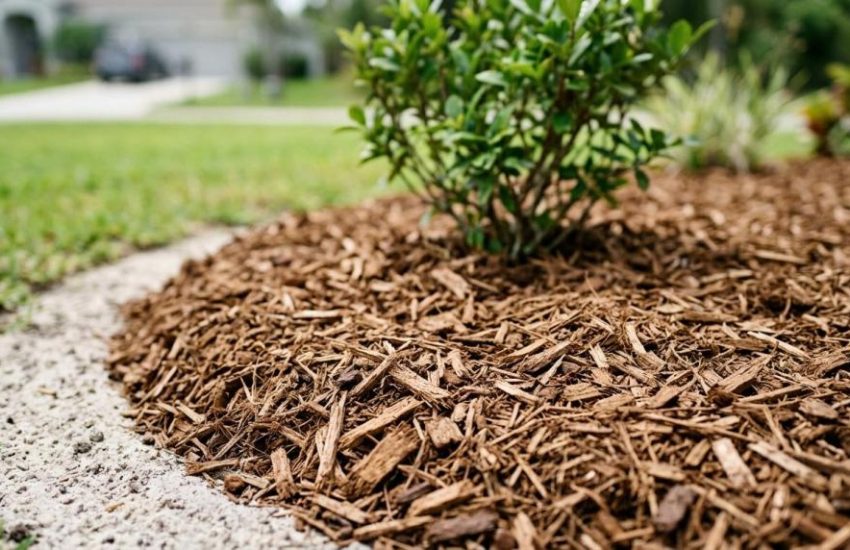
- Add a two- to three-inch mulch layer: Mulch helps keep moisture in, suppress weeds, reduce erosion, and make beds look more uniform.
- Remove awkward turf zones: Narrow strips, corners, and hard-to-mow edges often cost more in labor than they return in appearance.
- Group plants by water needs: Hydrozoning makes irrigation simpler and reduces overwatering or underwatering in mixed beds.
- Keep high-maintenance plants in focal areas only: Put the fussy color near the entry or patio, not across the whole property.
A pro tip here is to rank every part of the yard by repeat labor, not by square footage. A small side strip that needs edging, weed control, and sprinkler adjustment can cost more over time than a larger mulched bed planted correctly.
How do you replace thirsty plants with lower-maintenance Florida-friendly options?
Start by matching plant choice to sun, soil, and water zones; AllPro Tree & Landscaping sees this issue often in Tampa Bay landscapes where full-sun beds are planted as if they were shaded gardens.
Step 1: Audit each bed for full sun, part shade, reflected heat, drainage speed, and existing irrigation. This is the real “right plant, right place” test. If a plant needs frequent rescue watering, it is already telling you the site match is weak.
Step 2: Separate plants into three groups: worth keeping, worth moving, and worth replacing. Keep plants that are healthy with minimal intervention. Move plants that are fine but misplaced. Replace the ones that repeatedly decline, thin out, or invite pest and disease stress.
Step 3: Replant with native or adapted choices that fit the zone and mature size. A common mistake is choosing a plant only by how it looks in a nursery pot, ignoring its aesthetics in the overall landscape. The real question is what it will need in year two and year five.
Healthy plant selection cuts future pruning, irrigation, fertilizer demand, and replacement purchases all at once.
How should you use mulch to reduce weeds and watering?
Use mulch as a functional layer, not just a cosmetic topdressing; UF/IFAS recommends a two- to three-inch layer in planting beds.
Mulch works because it blocks light from reaching many weed seeds, slows evaporation, and helps moderate surface conditions around roots. UF/IFAS also points out that mulch is useful in spaces that are too small or too difficult to mow well. That makes it a cost-control tool as much as an appearance upgrade.
Step 1: Clear existing weeds and define the bed edge before mulching. If weeds stay underneath, mulch becomes a cover for a problem rather than a fix.
Step 2: Apply enough material to create a real barrier. Too thin and weeds come through quickly; too thick and the bed can hold too much moisture or look mounded and artificial.
Step 3: Refresh only where the layer has broken down or thinned. Many owners over-apply every season when spot refreshing would do the job.
Pro tip: mulch helps with weeds, but it does not replace plant spacing and bed density. Bare gaps between plants still invite weed pressure even when the bed is mulched well.
Is turf grass or planted beds cheaper to maintain in Florida?
Neither is always cheaper; the lower-cost option depends on design, plant choice, and how much precision the space needs.
Large lawn areas usually mean more mowing, edging, and irrigation oversight. Yet poorly planned planting beds can become even more expensive if they are packed with high-maintenance ornamentals, annual color, or mixed water needs. The better comparison is not lawn versus beds in theory. It is simple lawn versus simple beds in practice.
A useful way to compare them is by recurring tasks:
- Turf costs: mowing, edging, irrigation coverage, patch repair
- Bed costs: mulching, pruning, weeding, plant replacement
If a property has wide open lawn that mows cleanly, keeping some turf may be efficient. If it has narrow strips, slopes, corners, or tree-rooted areas that never mow nicely, converting those trouble spots to mulched beds or rock-accent areas can cut recurring labor. The misconception to avoid is “remove all grass.” Often the smarter move is keeping turf only where it functions well.
Should you keep irrigation everywhere or design for rainfall?
Designing for rainfall and minimal hand watering is possible after establishment, but only with the right plant palette and grouped water-use zones.
UF/IFAS states that a landscape designed without an irrigation system is intended to exist on rainfall and minimal hand watering once plants are established. That is a strong standard, but it is not the same as planting anything anywhere and hoping summer rain covers it. Florida-friendly low-water design still depends on hydrozoning, soil awareness, and realistic plant selection.
“AllPro Tree & Landscaping handles both landscape installation and underground drainage, which matters when a low-water design still has to survive Florida downpours.”
The trade-off is control versus simplicity. Full irrigation coverage gives flexibility but can encourage overwatering, especially when one zone serves plants with different needs. A rainfall-first design lowers system dependence, but it asks for more discipline during plant selection and establishment. If the yard has a few focal beds and the rest is built around adapted plants and mulch, the rainfall-first approach gets much easier.
How do you concentrate high-maintenance plants without losing curb appeal?
The best way is to keep demanding plants in visible focal zones near entries, patios, or signage while the rest of the yard carries a simpler Florida-Friendly palette.
UF/IFAS specifically recommends placing high-maintenance plants in the most visible areas to solve an aesthetics issue, ensuring the landscape remains visually appealing. That advice solves an aesthetic problem and a budget problem at the same time. You still get color, structure, and a finished look where people notice it most, but you are not multiplying the labor across the whole property.
Step 1: Identify the top visual zones, usually the front entry, main walkway, mailbox area, pool view, or clubhouse approach.
Step 2: Reserve the highest-input plants for those limited areas only. These might need more shaping, deadheading, or watering, but the square footage stays controlled.
Step 3: Build the rest of the yard with larger sweeps of lower-maintenance shrubs, groundcovers, mulch, and durable edging.
A good design lesson here is that repetition often looks cleaner than variety. Many landscapes become hard to maintain because every bed tries to be a showcase bed.
Do native plants always mean a no-maintenance yard?
No, native plants usually reduce maintenance and inputs, but they still need correct siting, establishment, and periodic care.
UF/IFAS supports native plants as lower-resource choices, especially for Florida conditions, but “native” is not a magic word. A native species placed in the wrong light, crowded too tightly, or expected to stay unnaturally small can still create pruning and replacement work. The same is true for drought-tolerant plants. Drought tolerant does not mean drought proof during establishment.
The smarter expectation is lower maintenance, not zero maintenance. Native and adapted plantings often need less irrigation, less fertilization pressure, and fewer interventions once settled in. That is a meaningful cost advantage. The common mistake is treating low-maintenance planting as install-and-ignore. Early watering, correct spacing, and routine observation still matter.
When does drainage or storm cleanup become part of a low-maintenance landscape plan?
Drainage and storm cleanup become part of maintenance control when water sits too long, roots stay saturated, or debris keeps resetting the yard; AllPro Tree & Landscaping treats these as design issues as much as cleanup tasks.
A landscape cannot stay low maintenance if every heavy rain sends mulch downhill, leaves roots waterlogged, or drops repeated debris into beds and turf. In Florida, drainage and storm response are not side topics. They affect weed pressure, plant stress, soil stability, and how often a property needs restorative work.
Watch for these signs that the problem is structural, not just cosmetic:
- Standing water: beds stay wet long after rain
- Mulch migration: material washes into turf or hardscape
- Storm debris cycles: tree litter or broken limbs repeatedly damage the same zones
- Declining plants: roots struggle in persistently saturated areas
If those conditions are present, plant swaps alone will not solve upkeep costs. A lower-maintenance landscape sometimes starts with grading, underground drainage, selective tree work, or cleanup planning so the planting design can actually perform the way it was intended.
That broader drainage point matches Hampshire Drain Expert’s breakdown of warning signs around recurring saturation and runoff, which shows how water problems often sit below the planting layer rather than in the plant mix itself.
