How Can You Tell If Your Tree
Key Takeaway:
You can tell a tree is dying if you notice brittle bark, fungal growth at the base, or a lack of buds during the growing season. In Florida, signs like sudden leaf drop on a Live Oak or “bleeding” sap on a Pine often point to internal decay. If the trunk shows deep cracks or the root zone feels spongy, the tree likely poses a safety risk.
__________________________________________________________________________________________________________________________
Living in Tampa Bay means sharing our yards with some of the most beautiful hardwoods and pines in the country. But as a homeowner in Pinellas, Pasco, or Hillsborough, you also know that our weather is tough on them. High humidity and heavy summer storms can turn a majestic Oak into a property hazard.
Knowing the signs a tree is dying is about more than just aesthetics; it is about keeping your home and family safe.
If you are worried about a tree on your lot, you are not alone. Many neighbors notice dead tree symptoms like thinning leaves or tree bark falling off, but aren’t sure if the tree is truly gone or just stressed. This guide covers how to spot internal decay and root rot signs before the wind makes the decision for you.
What Are the Most Common Signs a Tree Is Dying?
A healthy tree works like a massive plumbing system, moving water from the root system up to the highest leaves. When that nutrient flow gets blocked by disease or age, the tree sends out distress signals.
If you are walking your property, keep an eye out for these red flags:
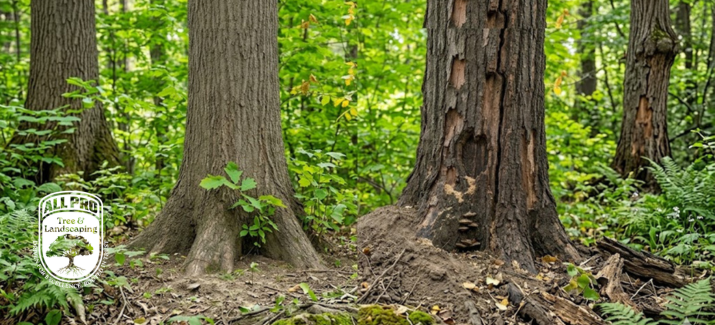
- Brittle Wood and Peeling Bark: On a vigorous tree, the bark is tight and protective. If you see chunks of bark on the ground or exposed wood that feels bone-dry, the tree is losing its armor.
- Mushrooms at the Base: Seeing fungus or “conks” at the bottom of the trunk is a major warning. It usually means the tree roots or the heartwood are rotting from the inside out.
- Bare Branches in Summer: Our Florida hardwoods should be lush. If you see bare branches or dead leaves clinging to the top of the tree during the peak of the growing season, the tree is struggling to feed itself.
- Deep Trunk Cracks: While some surface cracks are normal, deep vertical splits suggest the trunk is losing its structural strength.
- A Sudden Lean: If a tree starts leaning or you see the soil mounding up on one side, the roots are no longer holding firm in our sandy Florida soil.
Why Is My Tree Bark Falling Off?
It is unsettling to see a tree literally losing its skin. While some trees shed naturally, seeing large sections of bare wood is a common sign of a tree dying.
When disease or pests have invaded the layer of wood just under the bark, the bark can no longer cling to the tree. This is a common sight with local Pines. Once the bark is gone, the tree cannot transport the water it needs to stay alive.
If the wood underneath looks dusty or has tiny holes, it is a sign that the local environment has taken its toll.
How Do You Identify Signs of Root Damage?
The root system is the foundation of the tree, but because it is underground, we often forget to check it. In the Tampa Bay area, heavy rain can lead to saturated soil, which is a breeding ground for root rot signs.
The Root Health Checklist:
- Lifting Soil: Look at the ground around the trunk. If the soil looks like it is being pushed up, the roots are failing to anchor the tree.
- Spongy Ground: If the area around the tree stays soggy or feels soft long after a rain, the roots may be decaying.
- Upper Canopy Thinning: When roots die, the furthest tips of the tree suffer first. You might see broken branches or fewer leaves at the very top.
- Yellowing Leaves: If the leaves turn yellow or brown out of season, it often points to a lack of oxygen or water at the root level.
Is It Possible to Save a Dying Tree?
If you catch the problem early, there is often hope. Homeowners frequently ask how to save a dying tree to avoid the cost of tree removal.
A certified arborist can look at the tree and determine if it just needs a little help. Sometimes, pruning away dead branches or improving the soil can give a tree a second chance. However, if the trunk has significant internal decay or if more than half the root system is gone, removal is the safest path. Don’t wait until a limb ends up on your roof or in your neighbor’s yard.
How Does a Professional Check Your Trees?
When an expert looks at your trees, they aren’t just looking at the leaves. They use a professional process to check for signs of a dying tree:
- Visual Check: Looking for holes, pests, or dead leaves that shouldn’t be there.
- The Sound Test: Tapping the trunk to find hollow spots that indicate rot.
- Root Flare Inspection: Clearing away mulch or dirt to see where the tree roots meet the trunk.
- Growth History: Looking at how much the tree grew last year versus this year.
FAQs
How can I tell if a branch is dead or just resting?
Try the “scratch test.” Take a small twig and scratch the bark with your thumbnail. If it is green inside, there is still life. If it is brown and snaps easily, it is a dead branch.
Is fungus on the bark always bad?
Lichen and moss are very common in our humid climate and are usually harmless. However, mushrooms growing out of the wood or at the soil line are signs of serious rot.
Why are my Pine needles turning brown?
If the needles near the trunk turn brown in the fall, that is normal. If the whole top of the Pine turns brown quickly, it is a sign of a serious health collapse.
Can a tree survive a lightning strike?
Sometimes, but lightning often causes hidden internal decay. A tree might look fine for a few months before it begins showing dead tree symptoms.
When is a tree a “hazard”?
A tree becomes a hazard when it has structural defects, like deep cracks or a hollow trunk, and is close enough to hit a house, car, or sidewalk.
Keep Your Property Safe and Beautiful
Your trees provide the shade that makes Florida summers bearable. But a dead or unstable tree can change from an asset to a liability in a single afternoon storm. Don’t wait for a storm to decide for you. Schedule a professional health assessment today.
At AllPro Tree & Landscaping Services, we treat your yard like it were our own. We know the Oaks and Pines of the Tampa Bay area and can give you an honest answer about the health of your trees.
Get Your Free Quote, and let’s make sure your landscaping projects stay safe and healthy for years to come.
